
Research Ethics and Academic Integrity
Research Ethics and Academic Integrity
Introduction
Scientific research serves as a fundamental pillar for the accumulation and development of knowledge; it is only complete when the scientific community shares the findings and the methodological procedures that led to them. To ensure the quality of this knowledge base and avoid redundant efforts, researchers are obligated to adhere to rigorous scientific writing standards. The ethical and legal principles of scientific publishing aim to achieve three primary objectives:
- Enhancing the credibility of information and the accuracy of scientific knowledge.
- Protecting intellectual property and ensuring authors' rights.
- Safeguarding the rights of participants in field studies.
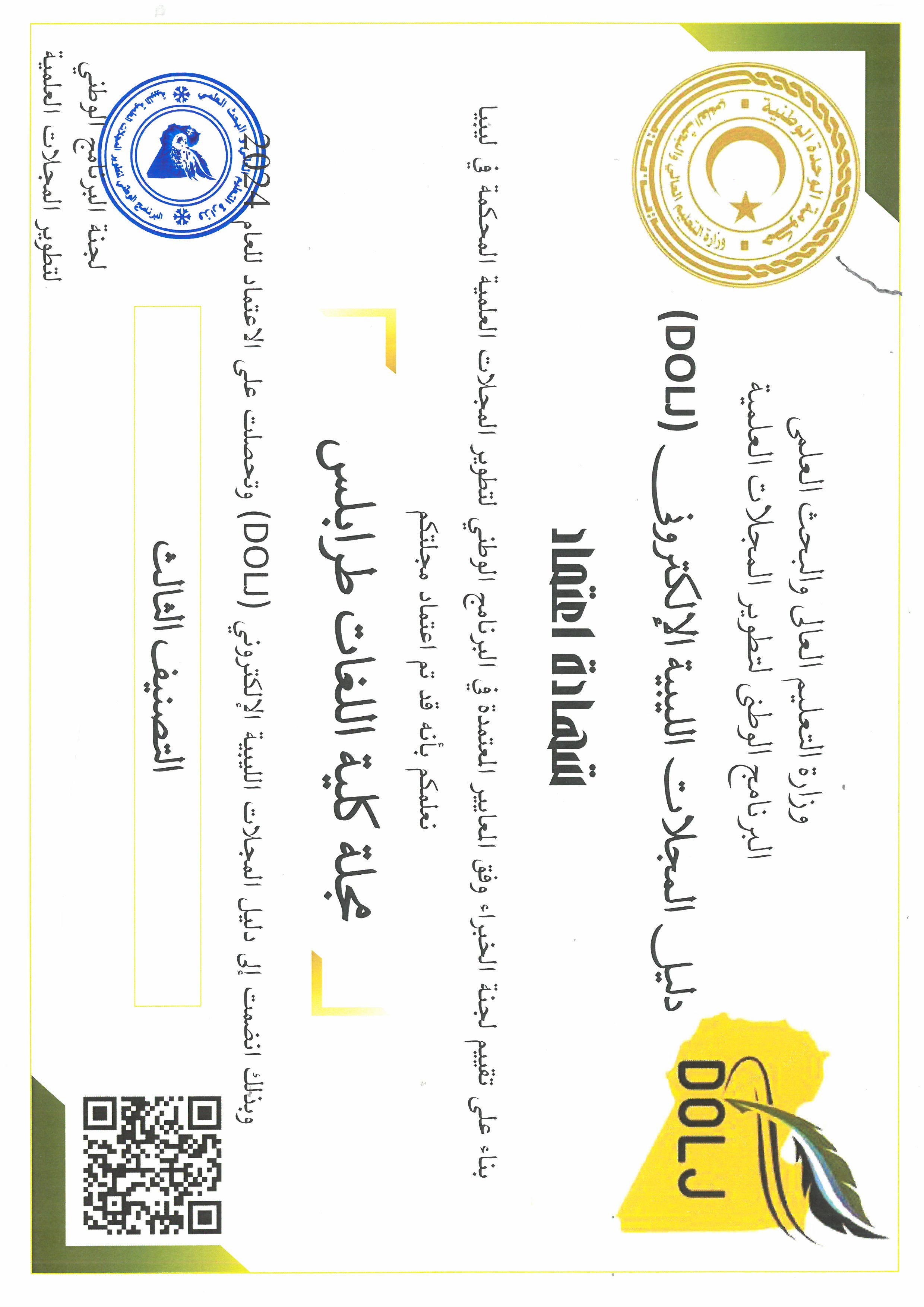
Libyan academic institutions, led by the University of Tripoli, are committed to the highest standards of scientific integrity, in accordance with the guidelines of the Committee on Publication Ethics (COPE) and international indexing standards. In this context, the Journal of the Faculty of Languages at the University of Tripoli adopts these strict ethical principles to ensure the originality and rigor of all published research.
I. Credibility of Information and Research Methodology
Researchers must present their study methodology with complete transparency to enable others to replicate the experiment and verify the validity of the results. The fabrication, falsification, or selective reporting of data to support preconceived hypotheses is strictly prohibited. Furthermore, researchers must make raw data available upon request, retain it for at least five years post-publication, and ensure the removal of any personal data that could reveal the identities of participants.
II. Publication Policy and Redundancy
Researchers may not publish the same study in two different sources as if they were two separate original works. However, republishing findings from a previous study may be permitted for valid scientific reasons within narrow limits, provided there is a clear citation of the original study and precise identification of the quoted information.
III. Intellectual Property and Author Rights
Intellectual property is attributed to those who have made a substantial contribution to the research (problem definition, design, analysis, or writing). Rights are classified into:
- Moral Rights: The author's right to have their work attributed to them and to object to any distortion that affects their professional standing. These rights are inalienable and do not expire.
- Economic Rights: The author's right to benefit financially from their work. Credible scientific journals, including the Journal of the Faculty of Languages at the University of Tripoli, support publishing policies that protect these rights, while adopting Open Access licenses (such as Creative Commons) to promote knowledge exchange while ensuring proper attribution to the author.
IV. Scientific Plagiarism
Plagiarism is defined as the use of the ideas or outputs of others without proper attribution, whether intentional or unintentional. This encompasses ideas, expressions, and paraphrasing. Utilizing one's own previous work and presenting it as new constitutes "self-plagiarism." In such cases, citing one's previous work is only permissible to the extent of scientific necessity and must be explicitly acknowledged.
V. Referencing and Citation
Citation is a necessary legal exception to copyright law, allowing for the use of portions of a work for critique, support, or educational purposes. Methods include:
- Direct Quotation: Placing the text within quotation marks while citing the source and page number.
- Paraphrasing: Restating ideas in the researcher's own words while crediting the author.
- Summarization: Condensing long texts while maintaining the original meaning and citing the source. The Journal of the Faculty of Languages at the University of Tripoli follows the documentation style of the American Psychological Association (APA 7th edition).
VI. Rights of Participants and Conflict of Interest
- Informed Consent: Researchers must inform participants about the research objectives and obtain their voluntary, coercion-free consent.
- Privacy: Data must be protected, and any potential harm to participants must be avoided.
- Conflict of Interest: Researchers, reviewers, and editorial board members must disclose any financial or personal relationships that may affect the objectivity of the research. The editorial board of the Journal of the Faculty of Languages at the University of Tripoli is responsible for ensuring absolute transparency; therefore, authors are required to include a "Conflict of Interest" statement within their submitted manuscript.